
Most people think every real estate deal shows up in your favorite listings app or on agent websites. Not even close. Nearly 40 billion euros in property is swapped each year without ever hitting the public eye. These off-market properties are where the boldest investors and most private sellers make moves ordinary buyers never even see.
Table of Contents
- What Are Off-Market Properties And Their Characteristics?
- Why Off-Market Properties Matter To Investors And Business Owners
- How Off-Market Transactions Work In Real Estate
- Key Concepts In The Off-Market Property Landscape
Quick Summary
| Takeaway | Explanation |
|---|---|
| Off-market properties enhance investment exclusivity | These properties offer strategic opportunities not available through public listings, allowing for potential early access to unique assets. |
| Less competition enables better negotiations | Buyers can often secure favorable terms due to a smaller pool of interested parties, leading to advantageous deals. |
| Robust networks are essential for success | Success in acquiring off-market properties relies heavily on strong professional relationships and insider information. |
| Use technology for efficient property discovery | Advanced digital tools and platforms can help identify off-market opportunities quickly and effectively. |
| Understand market dynamics for strategic advantages | Familiarity with the intricacies of off-market transactions can help investors optimize their acquisition strategies and uncover hidden value. |
What are Off-Market Properties and Their Characteristics?
Off-market properties represent a specialized segment of real estate transactions where properties are bought and sold outside traditional public listing platforms. These unique opportunities exist in a discreet marketplace that operates beyond standard multiple listing services (MLS), offering strategic advantages for sophisticated buyers and sellers.
Understanding the Fundamental Definition
An off-market property is a real estate asset not publicly advertised through conventional channels like websites, newspapers, or traditional real estate platforms. These properties are typically marketed through private networks, direct communications, and specialized professional connections. Investors and high-net-worth individuals often leverage these opportunities to access exclusive real estate options that are not accessible to the general public.
Key Characteristics of Off-Market Properties
Off-market properties possess several distinctive features that differentiate them from traditional real estate transactions:
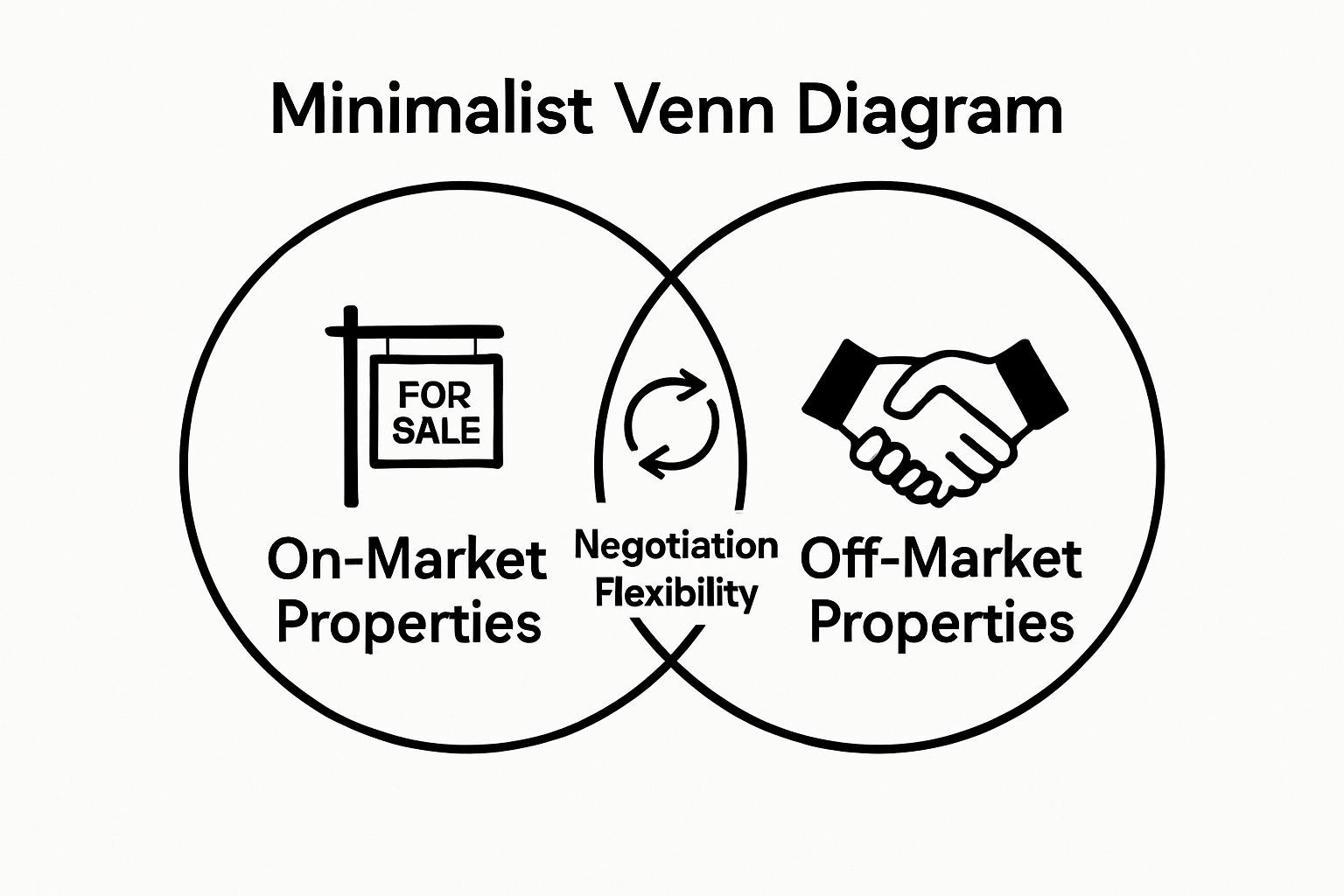
- Exclusivity: Limited exposure and restricted access to property details
- Privacy: Sellers maintain confidentiality about potential sale
- Negotiation Flexibility: More room for personalized deal structures
- Potentially Lower Competition: Fewer buyers aware of the property
According to technology analysis from Arab MLS, modern digital platforms have transformed how investors discover these unique property opportunities. Technological innovations now enable real estate professionals to identify and connect with off-market properties through advanced data aggregation, artificial intelligence algorithms, and specialized networking platforms.
These properties often emerge from various scenarios such as:
- Probate situations
- Potential foreclosures
- Inheritance transfers
- Personal network referrals
- Direct investor communications
While off-market properties present exciting opportunities, they require sophisticated understanding, robust professional networks, and strategic approach to successfully navigate and acquire. Professional buyers must develop comprehensive strategies that blend technological tools, personal connections, and deep market knowledge to effectively access these exclusive real estate opportunities.
Below is a table outlining the key characteristics that differentiate off-market properties from traditionally listed real estate, helping highlight what makes these assets unique for investors.
| Characteristic | Description |
|---|---|
| Exclusivity | Limited exposure; accessible to select networks |
| Privacy | Confidential sales with minimal public disclosure |
| Negotiation Flexibility | More room for personalized deal structures |
| Lower Competition | Fewer buyers aware, reducing bidding wars |
| Discovery Channels | Found through referrals, private outreach, digital tools |
Why Off-Market Properties Matter to Investors and Business Owners
Off-market properties represent a strategic asset class that offers unique advantages for sophisticated investors and business owners seeking exceptional real estate opportunities beyond traditional market channels. These properties provide access to exclusive investment landscapes that are not readily available through conventional transaction methods.
Strategic Investment Advantages
Investors and business owners are increasingly recognizing the significant benefits of off-market properties. Competitive advantage emerges from the ability to access properties before they reach public markets, enabling strategic acquisitions at potentially more favorable pricing and terms. This approach allows investors to bypass intense market competition and secure properties with greater negotiation flexibility.
Financial and Operational Benefits
Off-market properties offer multiple compelling advantages for business-focused investors:
- Price Optimization: Potential for acquiring properties at more competitive rates
- Reduced Transaction Costs: Fewer intermediaries and marketing expenses
- Faster Acquisition Process: Streamlined negotiations without extensive public marketing
- Targeted Investment Opportunities: Access to properties matching specific investment criteria
According to SEC documentation, sophisticated companies strategically source a significant portion of their property acquisitions through off-market channels, highlighting the critical importance of these transactions in professional investment portfolios.
Off-market properties are particularly valuable in scenarios such as:
- Corporate expansion strategies
- Real estate portfolio diversification
- Strategic asset repositioning
- Confidential investment opportunities
- High-net-worth individual wealth management
Professional investors understand that success in off-market property acquisition requires robust networks, deep market understanding, and a proactive approach to identifying and securing unique real estate opportunities. By developing sophisticated strategies that leverage personal connections, technological tools, and comprehensive market intelligence, business owners and investors can unlock exceptional value in the dynamic real estate marketplace.
How Off-Market Transactions Work in Real Estate
Off-market transactions represent a nuanced and sophisticated approach to real estate dealings that operate outside traditional public listing mechanisms. These specialized transactions require strategic networking, advanced communication channels, and deep professional relationships to facilitate property exchanges.
Information Flow and Transaction Mechanics
The core mechanism of off-market transactions revolves around private communication networks where property opportunities are shared selectively among trusted professionals. Real estate agents, investors, and high-net-worth individuals leverage personal connections, professional networks, and specialized platforms to identify and negotiate potential property acquisitions without public disclosure.
Key Transaction Pathways
Off-market property transactions typically emerge through several distinct channels:
- Direct Owner Outreach: Investors directly contact property owners before formal listing
- Professional Network Referrals: Real estate professionals share opportunities within trusted circles
- Specialized Digital Platforms: Exclusive online marketplaces for discrete property exchanges
- Broker Private Listings: Confidential property offerings shared among select professionals
According to research on online judicial housing auctions, comprehensive information disclosure strategies significantly impact transaction success rates. This principle applies equally to off-market transactions, where strategic information sharing becomes crucial in attracting potential buyers and facilitating successful property transfers.
The transaction process typically involves:
- Confidential property evaluation
- Discrete market positioning
- Targeted buyer identification
- Personalized negotiation strategies
- Streamlined legal documentation
Successful off-market transactions demand exceptional interpersonal skills, deep market understanding, and the ability to navigate complex professional relationships. Investors must cultivate extensive networks, maintain discretion, and develop sophisticated communication strategies to effectively participate in these exclusive real estate exchanges. The ability to identify, evaluate, and acquire properties through these specialized channels represents a significant competitive advantage in the sophisticated real estate marketplace.
This table summarizes the main pathways and participants involved in off-market real estate transactions, offering a clear view of how these deals are typically sourced and executed.
| Transaction Pathway | How It Works | Main Participants |
|---|---|---|
| Direct Owner Outreach | Investors contact owners before public listing | Investors, Property Owners |
| Professional Network Referrals | Trusted professionals share opportunities within their networks | Agents, Brokers, Network Members |
| Specialized Digital Platforms | Exclusive online platforms facilitate private property listings | Investors, Tech Providers |
| Broker Private Listings | Agents quietly market properties to a select group | Brokers, Prequalified Buyers |

Key Concepts in the Off-Market Property Landscape
The off-market property landscape represents a complex ecosystem of strategic real estate transactions that operate beyond conventional market mechanisms. Understanding these nuanced interactions requires comprehensive knowledge of the underlying principles and dynamics that govern these exclusive property exchanges.
Strategic Information Asymmetry
Information control emerges as a fundamental concept in off-market transactions. Sophisticated investors leverage their professional networks and specialized knowledge to access property opportunities before they become publicly available. This strategic approach allows for targeted acquisitions that minimize competition and maximize potential value.
Transaction Complexity and Network Dynamics
Off-market property transactions are characterized by several critical conceptual frameworks:
- Relationship Capital: Professional networks as primary transaction enablers
- Discretion Protocols: Maintaining confidentiality throughout negotiation processes
- Value Discovery: Identifying undervalued or strategic property assets
- Negotiation Flexibility: Customized transaction structures beyond standard market offerings
According to research by HPBA and bulwiengesa AG, off-market transactions represent a significant market segment, with approximately 40 billion euros of real estate exchanged through these specialized channels. This underscores the importance of understanding the intricate mechanisms that drive these exclusive property exchanges.
Key strategic considerations in the off-market landscape include:
- Developing robust professional networks
- Maintaining exceptional market intelligence
- Understanding complex valuation methodologies
- Navigating sophisticated legal and financial frameworks
- Cultivating trust-based professional relationships
Professional investors must recognize that success in the off-market property landscape requires more than transactional skills. It demands a holistic approach that combines deep market understanding, strategic networking, and the ability to identify unique value propositions. Learn more about luxury real estate marketing strategies to enhance your understanding of these sophisticated property transactions.
Ready to Access Exclusive Off-Market Properties with Confidence?
Navigating the world of off-market properties is complex. This article highlighted challenges like finding private opportunities, building trust, and using personalized negotiation strategies. You also saw how information control and strong network relationships set successful investors apart. If you want to unlock privacy, exclusivity, and significant value in luxury real estate, you need a partner who understands these subtleties—and acts quickly when opportunities appear.

Connect with our expert team at Living On The Côte d’Azur to discover discreet luxury investments across the French Riviera, Portugal, Ibiza, Italy, and Dubai. We offer boutique service, legacy-worthy opportunities, and unparalleled market insight. Our proven personal approach makes your off-market aspirations reality, whether you want to invest, relocate, or own a spectacular second home. Start your confidential conversation now at this contact page and transform your vision into success before the next exclusive listing is gone.
Frequently Asked Questions
What are off-market properties?
Off-market properties are real estate assets that are bought and sold without being publicly advertised through traditional channels like MLS or online listings. These transactions occur within private networks or through direct communications between sellers and investors.
What are the main advantages of investing in off-market properties?
Investing in off-market properties offers several advantages, including reduced competition, negotiation flexibility, potential for more favorable pricing, and opportunities to acquire properties tailored to specific investment criteria.
How can I find off-market properties?
Finding off-market properties involves leveraging professional networks, engaging in direct outreach to property owners, utilizing specialized digital platforms, and maintaining strong relationships with real estate professionals who can provide referrals.
What challenges do investors face when purchasing off-market properties?
Investors may encounter challenges such as limited information accessibility, the need for strong negotiation skills, a deep understanding of market dynamics, and the requirement for discretion in transactions. Building a robust professional network is crucial for overcoming these hurdles.
Recommended
 //
//