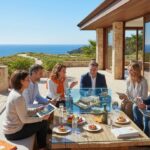
Sometimes something comes along that stands out. And that you appreciate more with every encounter. It happened to me this summer in La Petite Plage in Golfe-Juan. We love to come here for the fantastic beach, the delicious food, and the wonderful ambiance. But what really struck me was the tableware; handmade, solid earthenware with subtle artwork and organic shapes. Fine ceramic service perfectly complements what’s served on that plate: quality that carries quality.
I couldn’t help to turn over a plate (when the plate was empty) to see which shop it came from. But the Petite Plage tableware wasn’t from just any shop; it was a Tino Aiello plate. I turned cups and other serving dishes over to see his name everywhere. It was all made by Tino Aiello, the famous ceramic artist from Vallauris. That’s where this journey started.
Tino Aiello: A Legacy of Pottery in Vallauris
In Vallauris, the romantic village full of potting bakery history, resides Tino Aiello, a ceramic artist whose hands transform humble earth into symphonies of form and color. His work isn’t merely decorative; it’s a tactile poetry that elevates the everyday into the extraordinary, blending the raw poetry of the Riviera’s terroir with the refined sophistication of high-end interiors. In an era of mass-produced fleeting trends, Aiello’s 100% hand-made pieces stand as testaments to originality, unwavering quality, and boundless creativity—his unyielding signature.
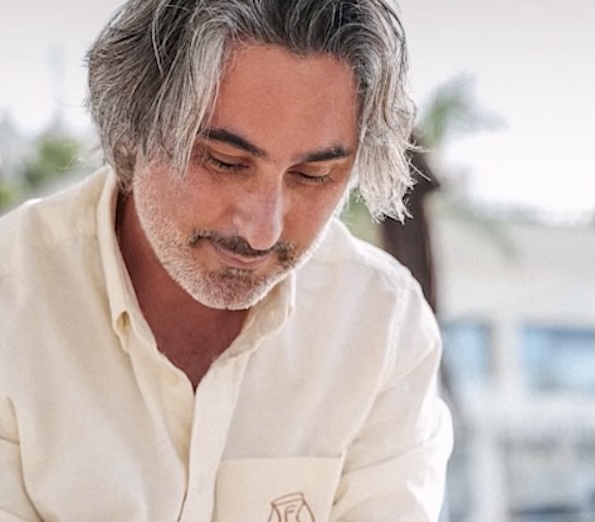
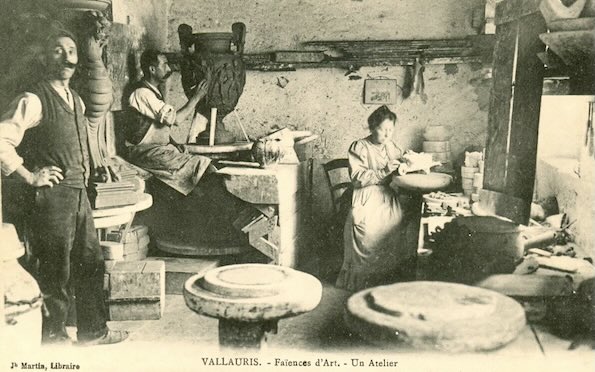
Tino’s work follows a seven-generation family tradition that started in Sicily and settled in Vallauris. His grandfather Tino, father Carmelo, and uncle Philippe focused on culinary pottery, making items like plates and bowls for everyday and special use. Tino Aiello grew up in the family workshops, often doing homework on pottery boards surrounded by the smell of clay. Tino Aiello continues his family’s craft from the workshop once used by Roger Capron.
A magical process of creativity
Under the leadership of Tino Aiello, the workshop transformed into an almost mythical location. Of course, courses are offered to those who want to learn how to create and bake pottery, and everyone is welcome in the shop to purchase a unique vase or tableware. And through Instagram, more and more people are finding their way to Vallauris.
But his studio is the heart of the place; here, Tino’s creativity runs at full speed, aligned with the potter’s wheel. The production is not just craftsmanship, but above all, a magical process. Tino feels, like an alchemist, the power of the Earth in the clay and the vibrations of the universe around him. This combination, plus the briefing from the client, continually inspires him to create a unique work of wall art, a vase, or a tableware collection. It was only logical that he won the French Championship in 2022 for best ”Tourneurs Potiers” (Wheel Potters).
In 2025, his clients include luxury hotels, royal families in the Middle East, exclusive yacht charters, and top restaurants. His audience is looking for originality and quality in handmade ceramics. It’s no wonder you encounter the name Tino Aiello in locations where luxury is constantly being redefined.
Visit his fantastic Instagram page for the latest updates.Exclusive platter for exclusive dining
Tino Aiello’s ascent into the realm of top-class restaurants marks the first chapter of his Riviera legacy. In Cannes, where gastronomic dining has been elevated to a true art, his ceramics have become the silent stars of forward-thinking eateries. When you are in Cannes, visit Mademoiselle Gray from the Barriere Hotel Group, or Restaurant La Môme, La Muse, and Medusa.
A piece, thrown on his wheel with the precision of a surgeon, could bear subtle imperfections: a thumb’s faint imprint here, a glaze drip there, celebrating the hand’s irreplaceable touch. These aren’t just plates and bowls; they’re conversation starters, their organic forms mirroring the restaurant’s ethos of authenticity amid extravagance.
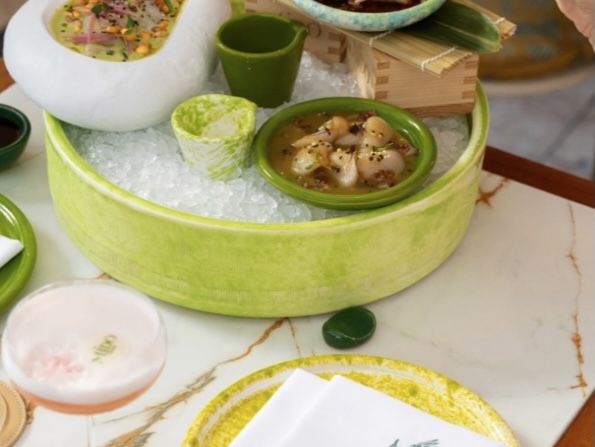
What sets these commissions apart is Tino Aiello’s collaborative intimacy; he visits sites months in advance, sketching inspirations from the venue’s architecture and menu philosophy. For Mido in Paris, he crafted a suite of asymmetrical bowls in smoky Raku finishes, their cracked surfaces whispering of ancient kilns while nodding to the eatery’s farm-to-table reverence.
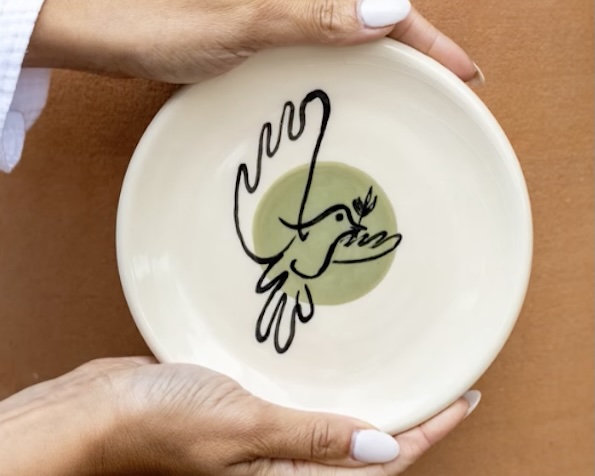
These works, entirely original and devoid of molds or machinery, underscore Tino Aiello’s creed: creativity isn’t replicated; it’s reborn in every firing. As one sommelier confided, “Aiello’s ceramics don’t just hold the food—they hold the story of the meal.”
Ceramic Wall Art for Luxury Properties
Yet, Tino Aiello’s oeuvre transcends the table, ascending to monumental scales in his impressive lamps and wall ceramic artwork panels. These are not mere murals but architectural symphonies, engineered to command space and soul. His panels find their way to palaces and classy entrances of luxury residences along the Côte d’Azur.
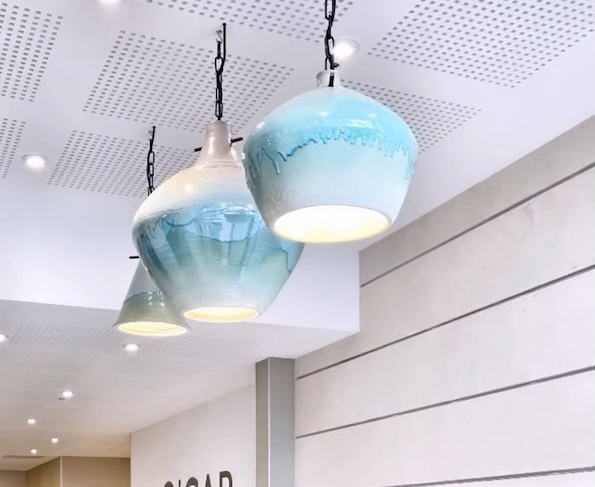
These installations, often spanning 20 square meters and more, are feats of endurance: Tino Aiello and his small cadre of assistants labor for months, from initial coil-building to multi-layer firings that can reach 1,300 degrees Celsius. The result? Walls that breathe, that invite touch, transforming sterile lobbies into living galleries.
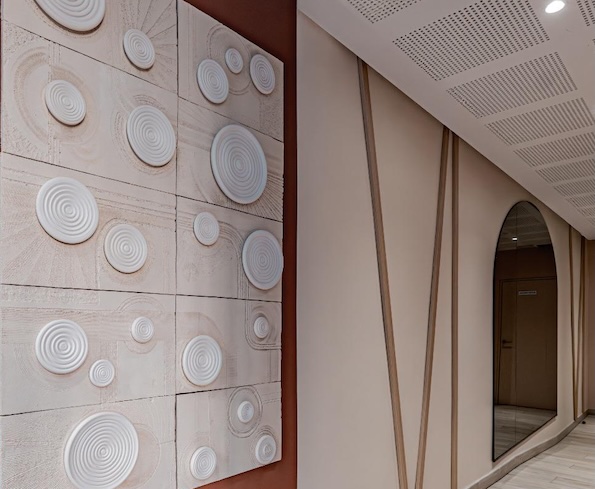
Clients from Monaco’s principality to Abu Dhabi palaces seek him out, knowing his panels—100% hand-crafted, irreproducible—impart a residence with narrative depth. Such art isn’t an add-on; it’s the estate’s heartbeat.
Unique tableware for Luxury Yachts
Perhaps Tino Aiello’s most poetic domain lies at sea, where he tailors crockery for the world’s superyachts—those floating fortresses of the elite. In an industry where opulence meets the ocean’s caprice, his pieces offer grounded elegance.
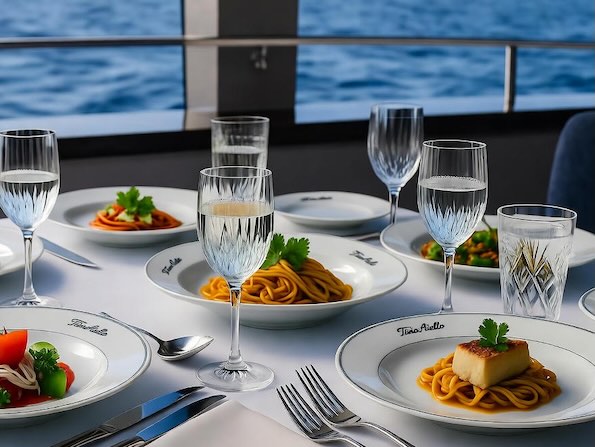
For the most exclusive yachts, Tino Aiello designs a complete service: stemware bases in frosted alabaster glazes, platters etched with nautical cartouches of dolphins and compass roses, all resistant to saltwater corrosion through proprietary low-expansion clays. Each set, comprising a minimum of 200 bespoke items, is designed for marine conditions with hand-made precision—lips gently flared, bases weighted for stability on pitching decks.
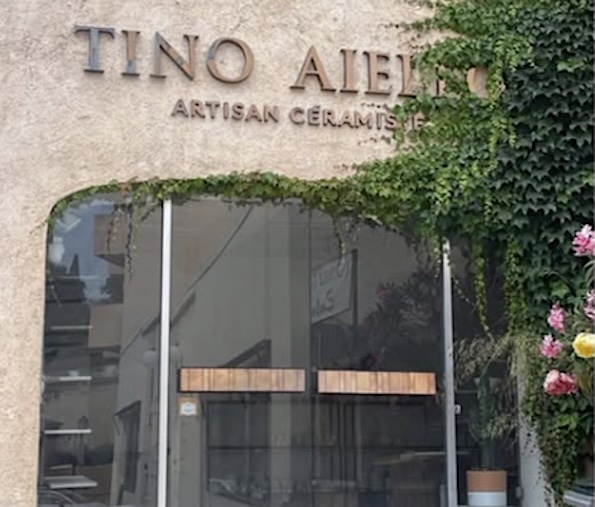
Tino Aiello: The Alchemist of Clay Crafting Timeless Elegance
For those curating lives of refined excess on the Côte d’Azur, Tino Aiello represents more than an artist; he’s a curator of memory. His ceramics weave into the fabric of luxury residences, from sunlit villas in Èze and Villefranche-sur-Mer to discrete estates in Super Cannes, reminding us that true extravagance lies in the imperfect, the human. As the French Riviera evolves—welcoming eco-conscious billionaires and digital nomads who crave authenticity—Aiello’s handiwork bridges old-world charm with new-world audacity.
With the representation of Tino Aiello in our portfolio, our clients at Living on the Côte d’Azur discover not just objects, but extensions of self: a restaurant plate that sparks dinner-party lore, a wall panel that frames family legacies, a yacht bowl that toasts horizons unseen. His art invites the touch, the story, the slow savoring of life’s finer clays.
 //
//