
More and more people are coming to France. Not for a holiday but to emigrate. That’s quite a step, especially if you have children. This article will help you better understand the French school system. Many schools provide extra French lessons especially for foreign children so that integration goes quickly.
The French education system is characterized by a strong presence of the state in its organization and financing. It is governed nationally by the Ministry of National Education and the Ministry of Higher Education. Research, and Innovation within the framework set by the legislature, which, according to the Constitution, “determines the fundamental principles of education” (Article 34 of the Constitution of October 4, 1958).
The official language of instruction is French, and public education is free and secular. According to the Education Code, schooling is compulsory for every child between the ages of 3 and 16.
The stages of the French education system
Early Childhood Education (3-6 years old):It is provided in nursery schools (écoles maternelles), attended by almost all children from the age of 3. It falls under the Ministry of National Education’s responsibility. My best memories are the naps. We were forced to take a nap for an hour after lunch. Isn’t that amazing?
Elementary Education (6-11 years old): Consists of a 5-year program in elementary schools (écoles élémentaires). At the end of this stage, children automatically move on to the next level of education (middle school or collège).
Lower Secondary Education (11-15 years old): Offered in middle schools (collèges). Attendance is compulsory for all students. At the end of the cycle (in the 3rd grade), students take the Diplôme national du brevet (DNB), which does not determine access to higher secondary education. Depending on academic performance and career aspirations, students may proceed to a general and technological high school (lycée), a vocational high school, or a preparatory year for a vocational certificate (CAP).
Upper Secondary Education (15-18 years old): Provided in general and technological high schools or vocational high schools. It consists of a three-year program with three pathways: There is general (preparing for long-term higher education).Technological (primarily for short-term higher education with a technical focus). And there is Vocational (leading primarily to employment but also offering access to higher education). The completion of upper secondary education is marked by obtaining the baccalauréat, which is the first university degree.
Higher Education
University: Universities offer three stages of study: bachelor’s (3 years), master’s (2 years), and doctorate (3 years) degrees. They also offer a wide range of subjects.
- Shorter Programs: This category includes two-year programs such as BTS (Advanced Technician’s Certificate) and DUT (University Technology Diploma), which offer practical training and facilitate employment.
- Grandes Écoles: Provide specialized five-year engineering, communication, and commerce programs. Admission to Grandes Écoles is through competitive exams, often preceded by preparatory classes.
- Specialized Training: This category includes institutions like Institutes of Political Studies, art schools, and national administrative schools, each with its own admission process.
Typical schedules for each section
Preschool (3-6 years old):
- Duration: Approximately 3 to 4 hours per day.
- Activities: Play, language development, arts, and social skills.
Primary School (6-11 years old):
- Duration: Around 24 to 30 hours per week, spread over 4 to 5 days.
- Subjects: Mathematics, sciences, languages, history-geography, physical education, and arts.
Middle School (11-15 years old):
- Hours: From 8:00 a.m. to 5:00 p.m. or 6:00 p.m., Monday to Friday.
- Duration: Approximately 26 to 30 hours of classes per week.
- Subjects: Mathematics, sciences, languages, history-geography, physical education, and arts.
High School (15-18 years old):
- Hours: Similar to middle school but may vary depending on options.
- Duration: Between 25 and 35 hours of classes per week.
- Subjects: Vary according to the chosen track (general, technological, professional).
Higher Education (18 years and older):
- Hours: Vary depending on the type of institution and program.
- University: Lectures, tutorials, and seminars spread throughout the week.
- Grandes Écoles: More structured and intensive schedules, especially in preparatory programs for admission exams.
Holidays
In France, the zones A, B, and C are administrative divisions used primarily for organizing school holiday schedules.
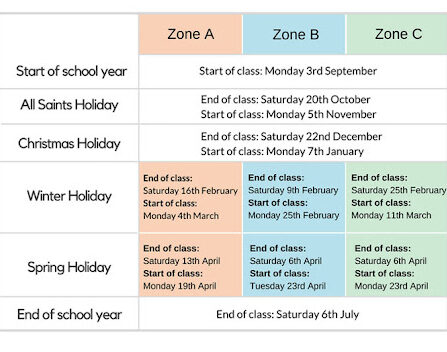
Zone A: Zone A comprises certain regions in the northwest and southwest of France, including cities like Paris, Lyon, Marseille, and Toulouse. It covers academies such as Bordeaux, Caen, Clermont-Ferrand, Grenoble, Limoges, Lyon, Montpellier, Nancy-Metz, Nantes, Rennes, and Toulouse.
Zone B: Zone B includes regions in the northeast, centre, and some parts of the south of France. It covers academies such as Aix-Marseille, Amiens, Besançon, Dijon, Lille, Nice, Orléans-Tours, Poitiers, Reims, Rouen, and Strasbourg.
Zone C: Zone C encompasses the remaining parts of France, including the Paris metropolitan area, the French Riviera, and parts of the west and southeast. It covers academies such as Créteil, Paris, and Versailles.
These zones help stagger school holiday periods to alleviate congestion during peak travel times and spread holiday traffic evenly across the country. Each zone has its own set of holiday dates, with schools in one zone typically having different holiday periods from those in the others.
Subjects & Classes
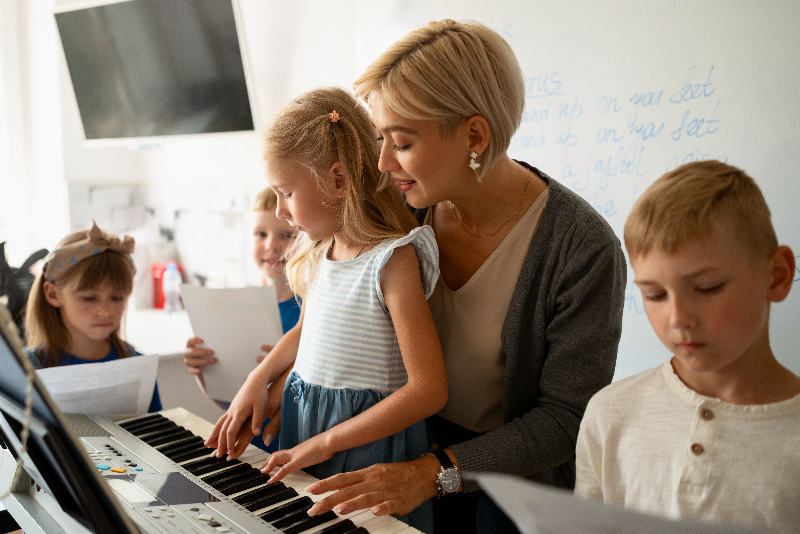
Mathematics: Mathematics education in France covers arithmetic, algebra, geometry, and calculus. Students learn problem-solving skills and mathematical reasoning from primary school through high school.
Sciences: Science education includes biology, chemistry, physics, and earth sciences. Students explore scientific concepts, conduct experiments, and develop critical thinking skills, very interesting and fun experience!
Languages: French language and literature are core subjects, focusing on grammar, literature analysis, and writing skills. Additionally, students are obliged to learn English, and they typically learn at least one foreign language, such as Spanish, German, or Italian, and an old language, such as Latin.
I personally almost did it all, thanks to the numerous travels included. I went to Rome with my Italian class, to Nimes and Pompeii with my Latin class. We engaged in many enjoyable activities. Therefore, I highly recommend taking these classes. Additionally, you can earn extra points on your exams! The downside is that you’ll have extra hours in your schedule and you might finish later than some of your friends but whatever, it is really worth it!
History and Geography: History courses cover various historical periods, events, and civilizations, while geography explores topics like world regions, landscapes, and human-environment interactions.
Physical Education (PE): PE classes promote physical fitness, team sports, and individual activities like swimming, gymnastics, and track and field. PE is compulsory at all levels of schooling.
Arts: Arts education encompasses visual arts, music, theatre, and dance. Students learn artistic techniques, explore cultural expressions, and engage in creative projects, of course this was my favourite subject!
Technology: Technology and computer science education introduce students to digital literacy, programming basics, and technology tools for learning and communication.
Civics and Ethics: Civics courses educate students about democracy, citizenship, human rights, and societal values. Ethics education encourages critical thinking and ethical decision-making.
Overall, the curriculum in French schools aims to foster intellectual curiosity, critical thinking, and lifelong learning skills across diverse subject areas.
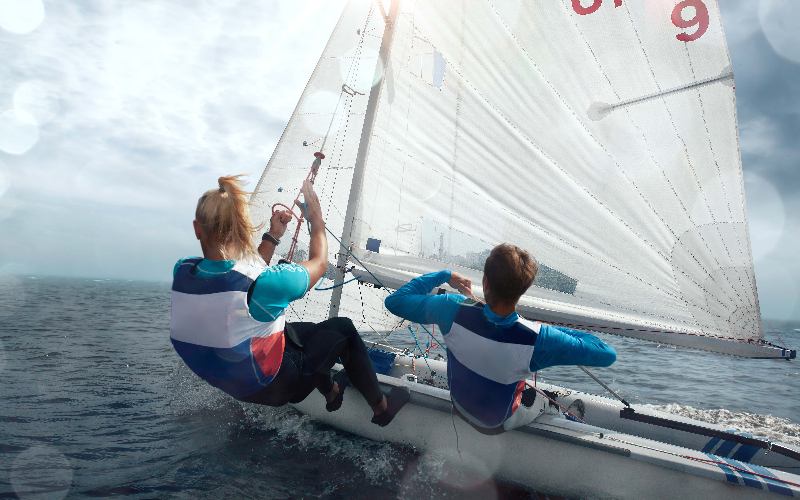
Physical sport activities
In the French education system, physical and sports activities play a significant role at various stages of schooling, both at the primary and secondary levels.
Back in my school days, PE wasn’t just about gym class and running laps; it was about adventure! One of the coolest things we did was orienteering in the wild, where we turned the forest into our playground. Armed with maps and compasses, we dashed through the trees like real-life explorers, trying to find hidden checkpoints and conquer the wilderness. It was like being on our own treasure hunt!
And then there was sailing—oh, the thrill of the open water! Living near the coast had its perks, and we made the most of them. Learning the ropes of sailing wasn’t just about catching the wind. It was about mastering the waves and feeling the rush of adrenaline as we tamed the sea. There’s nothing quite like harnessing the power of the wind and riding the waves with your mates!
And let’s not forget about pool time! Swimming wasn’t just about doing laps; it was about diving into a world of aquatic adventures. We perfected our strokes, splashed around and even learned some lifesaving skills. Plus, who can forget the epic pool parties and synchronized swimming routines? It was all about making a splash and having a blast!
These experiences weren’t just about staying fit. They were about unleashing our inner adventurers, exploring new horizons, and making memories that would last a lifetime.
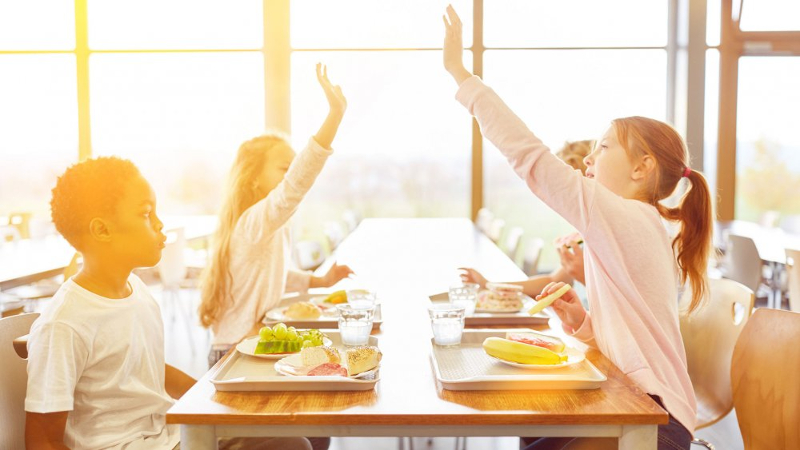
The Cantine – The French school cafeteria
Ah, the memories! Fridays were always a treat with moules (mussels), a true taste of the sea that made the end of the week feel like a mini celebration. However, on Mondays, they brought us back to reality with a hearty serving of chicken, fresh vegetables, and a classic egg salad starter.
Of course, no French meal is complete without a cheese course, followed by choice between a creamy yoghurt, fruits or a delightful scoop of ice cream
Nutritious Meals: The French school lunch program emphasizes balanced and healthy meals. Students are provided with various options, including fresh fruits and vegetables, lean proteins, dairy products, and whole grains. The meals are designed to meet nutritional guidelines and promote healthy eating habits among students.
Cultural Importance: The school cafeteria is not just a place to eat. It’s also an opportunity for students to learn about French culinary traditions and regional specialities. Meals often reflect the rich diversity of French cuisine, incorporating local ingredients and flavours.
Socialization: The cafeteria serves as a social hub where students from different classes and grades come together to enjoy their meals. It allows students to interact with their peers, develop social skills, and build friendships outside of the classroom.
Educational Opportunities: Besides providing nutritious meals, some school cafeterias offer educational initiatives related to food and nutrition. These may include cooking workshops, tastings of local produce, or discussions about healthy eating habits and food sustainability.

International Schools
The international schools on the French Riviera :
- International School of Nice (ISN) in Nice
- Mougins School in Mougins
- International Bilingual School of Provence (IBS) in Luynes
- CIV International School in Sophia Antipolis
- Ecole Internationale de Sophia Antipolis in Biot
These schools offer international educational programs and often welcome students from various nationalities. They provide a diverse and multicultural environment where students can learn and grow together.
Old school traditions
No phones are allowed; the students must switch off their phones (however, in an emergency, they can switch them back on). In high school, you can use your phone, but only at lunchtime. When the bell rings and you have to go back to the classroom, your phone must be off. I had a teacher who had a little box, and we had to put our phones in it during her class. Yes, she was very strict, but at least we were 100% focused.
Drink water. Yes, we have to drink water the whole day, and no sodas are allowed. I’m very grateful for that.
Respect is the main thing we learn in school when the teacher arrives in the classroom we stand behind the chair, until she/he decides that we can sit down, oh and get enough sleep because the teachers will not allow you to sleep in class.
So, are you ready to send your children to the French school system ? Here are some of the best International schools on the French Riviera.
 //
//