Nearly 60 percent of british and American luxury investors now consider eco-credentials a top priority when acquiring property on the Côte d’Azur. For high-net-worth individuals and family offices, integrating sustainability with legacy-building transforms real estate from a simple asset into a multi-generational statement. This article highlights how curated investments in eco-friendly estates blend enduring heritage with cutting-edge environmental innovation, reshaping what luxury property means for the future.
Table of Contents
- Defining Sustainable Luxury Property Investment
- Types Of Sustainable Luxury Real Estate
- Core Features Of Eco-Friendly Estates
- Legal Processes And Due Diligence
- Financial Implications And Market Performance
- Common Pitfalls And Expert Strategies
Key Takeaways
| Point | Details |
|---|---|
| Sustainable Luxury Investment | Sustainable luxury property investment combines ecological responsibility with high-end living, emphasising energy efficiency and eco-friendly technologies. |
| Property Types | Investors can choose from diverse sustainable property types, such as heritage restorations and eco-villas, each offering unique luxury benefits. |
| Financial Benefits | Sustainable properties often yield lower operational costs and enhanced market resilience, potentially delivering superior financial returns. |
| Legal Due Diligence | Comprehensive legal processes are crucial, requiring thorough assessments of environmental impacts and compliance with sustainability regulations. |
Defining Sustainable Luxury Property Investment
Sustainable luxury property investment represents a sophisticated fusion of opulent living and environmental stewardship, transcending traditional real estate paradigms by integrating ecological responsibility with high-end asset acquisition. This emerging investment approach transforms luxury real estate from mere transactional assets into holistic, future-forward environments that balance aesthetic excellence with ecological consciousness.
At its core, sustainable luxury property investment encompasses properties designed to minimise environmental impact while delivering exceptional living standards. These investments prioritise comprehensive ecological integration and performance metrics, considering factors beyond traditional valuation models. Key characteristics include energy-efficient designs, renewable energy systems, water conservation technologies, and materials sourced through environmentally responsible supply chains.
The French Riviera represents a premier landscape for such investments, where architectural heritage meets contemporary sustainable innovation. Sustainable luxury properties in this region typically feature advanced technologies like solar panel installations, geothermal heating systems, rainwater harvesting infrastructure, and intelligent building management systems that dramatically reduce carbon footprints. Climate resilience has become a critical factor in luxury development strategies, transforming how investors conceptualise long-term property value and environmental responsibility.
Pro Tip – Sustainable Investment Strategy: Prioritise properties with verified green certifications and documented energy performance ratings, as these credentials will increasingly drive market value and attract environmentally conscious high-net-worth buyers.
Types of Sustainable Luxury Real Estate
Sustainable luxury real estate has evolved into a diverse ecosystem of innovative property types that transcend traditional architectural boundaries, offering discerning investors multiple pathways to environmentally conscious living. These property categories range from meticulously restored heritage buildings to cutting-edge eco-developments, each representing a unique approach to integrating luxury with environmental responsibility.
The first category encompasses heritage restoration projects, where historic properties along the French Riviera are transformed using advanced sustainable technologies. These properties preserve architectural integrity while implementing modern energy-efficient systems, solar panels, and smart home technologies. A second significant category involves vertical green developments, which integrate comprehensive ecological design principles. Contemporary sustainable luxury properties now feature sophisticated urban biodiversity strategies, including rooftop gardens, living walls, and integrated renewable energy systems that dramatically reduce environmental footprints.

Additional sustainable luxury real estate typologies include adaptive reuse developments, where former industrial or commercial spaces are reimagined as high-end residential properties, and purpose-built eco-villas that incorporate passive design principles. These properties leverage advanced materials like recycled composites, employ geothermal heating and cooling systems, and utilise water recycling technologies to create self-sustaining living environments. The Ultra Luxury Riviera Legacy developments represent the pinnacle of this approach, blending architectural excellence with environmental consciousness.
Pro Tip – Sustainable Property Selection: Prioritise properties with verified green certifications, comprehensive energy performance documentation, and demonstrable ecological design features to ensure long-term investment value and environmental integrity.
Below is a comparison of sustainable luxury real estate typologies and their unique value propositions:
| Property Type | Key Sustainable Feature | Unique Luxury Benefit |
|---|---|---|
| Heritage Restoration | Preserved architecture with eco-upgrades | Blends legacy aesthetics with modern comfort |
| Vertical Green Development | Living walls and rooftop gardens | Urban biodiversity with scenic appeal |
| Adaptive Reuse Development | Recycled materials and smart systems | Distinctive character, bespoke layouts |
| Purpose-Built Eco-Villa | Passive design, self-sustaining systems | Maximum privacy and high efficiency |
Core Features of Eco-Friendly Estates
Eco-friendly estates represent a sophisticated convergence of technological innovation, architectural excellence, and environmental consciousness, transforming luxury property investments into holistic living ecosystems. These extraordinary properties transcend traditional real estate paradigms by integrating advanced design principles that prioritise sustainability without compromising aesthetic appeal or comfort.
Design features of eco-friendly estates encompass comprehensive environmental performance metrics, focusing on energy efficiency, resource conservation, and intelligent systems integration. Key architectural elements include passive solar design, which optimises natural heating and cooling, advanced thermal insulation, and strategically positioned windows that maximise natural light while minimising heat gain. Renewable energy systems such as photovoltaic panel installations, geothermal heating, and sophisticated battery storage solutions form critical infrastructure components that reduce carbon footprints and enhance long-term property value.
Beyond technological innovations, sustainable buildings integrate lifecycle management strategies that balance luxury, comfort, and ecological responsibility. This approach involves selecting premium, low-impact building materials like recycled composites, responsibly sourced timber, and locally manufactured components that minimise transportation emissions. Advanced water management systems, including rainwater harvesting, greywater recycling, and intelligent irrigation technologies, demonstrate a holistic approach to resource conservation. Indoor environmental quality is similarly prioritised through air filtration systems, non-toxic material selections, and design elements that promote natural ventilation and occupant well-being.
Pro Tip – Sustainable Estate Assessment: Conduct comprehensive technical audits that evaluate not just a property’s current sustainable features, but its potential for future ecological upgrades and retrofitting capabilities.
Legal Processes and Due Diligence
Legal processes and due diligence for sustainable luxury property investments represent a complex landscape of regulatory compliance, environmental responsibility, and strategic risk management. Discerning investors must navigate an intricate framework of international and local regulations that extend far beyond traditional property acquisition protocols.
The European Union’s corporate sustainability due diligence directive establishes a comprehensive legal framework for responsible property investments, requiring meticulous evaluation of environmental and human rights impacts. Key legal considerations include comprehensive audits that assess not only the physical property but its entire operational ecosystem. This involves examining supply chain sustainability, verifying carbon footprint documentation, reviewing historical land use, and ensuring compliance with local and international environmental protection standards.
International legal research highlights the evolving complexity of cross-border sustainable property acquisitions, emphasising the need for sophisticated legal strategies that address environmental, social, and governance (ESG) criteria. Investors must conduct thorough environmental impact assessments, verify green building certifications, investigate potential ecological liabilities, and ensure alignment with emerging sustainability regulations. This process involves collaboration with specialised legal experts, environmental consultants, and local authorities to create a comprehensive due diligence framework that protects both investment value and ecological integrity.
Pro Tip – Legal Risk Mitigation: Engage multilingual legal specialists with specific expertise in international sustainable property investments, ensuring comprehensive risk assessment and regulatory compliance across jurisdictions.
Financial Implications and Market Performance
Sustainable luxury property investments represent a sophisticated financial ecosystem where environmental consciousness intersects with strategic wealth generation. These assets transcend traditional real estate paradigms, offering investors a nuanced approach to wealth preservation that balances financial returns with ecological responsibility.
Global research reveals compelling evidence of how environmental, social, and governance (ESG) factors directly influence property investment profitability, demonstrating that sustainable properties can generate superior financial performance. Market valuations increasingly reflect properties’ ecological credentials, with green-certified estates commanding premium pricing and attracting discerning investors seeking long-term value appreciation. Sustainable luxury properties typically exhibit enhanced resilience against market volatility, offering more stable investment trajectories compared to conventional real estate assets.
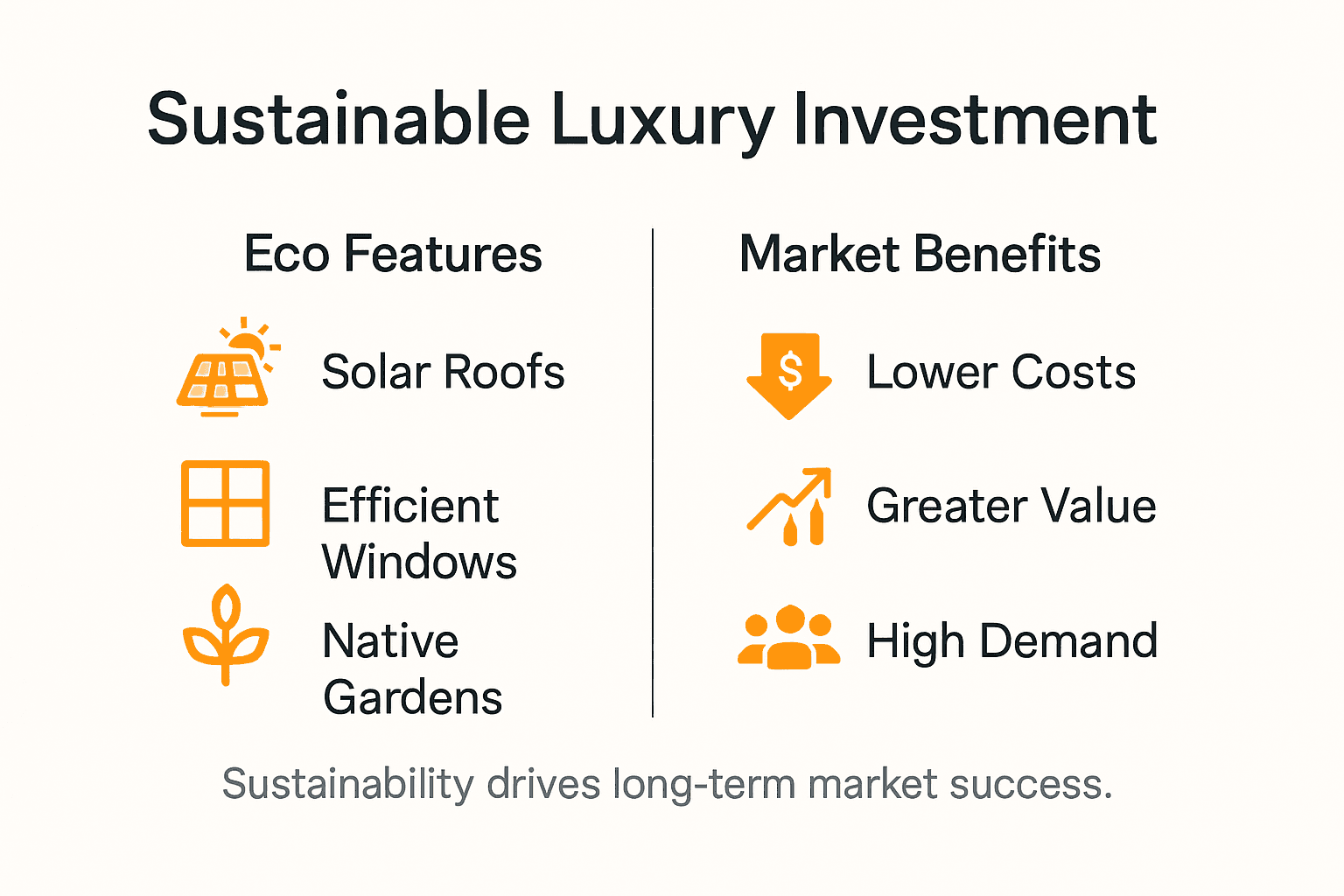
Comprehensive financial analyses highlight the intricate relationship between sustainability metrics and investment performance, revealing that properties integrating advanced ecological technologies can generate significantly higher returns. Key financial advantages include reduced operational costs through energy efficiency, potential tax incentives for green building certifications, and increased marketability to environmentally conscious buyers. Investors can anticipate potential yield enhancements ranging from 3-7% through strategic sustainable property investments, with additional value derived from lower maintenance expenses and superior long-term asset preservation.
Pro Tip – Financial Strategic Planning: Develop a comprehensive investment strategy that quantifies both financial returns and ecological impact, utilising specialised sustainability performance metrics to inform sophisticated investment decisions.
The table below outlines essential financial advantages of sustainable luxury properties:
| Advantage | Financial Impact | Long-Term Benefit |
|---|---|---|
| Energy Efficiency | Lower utility and operational costs | Enhanced profitability |
| Green Certification Incentive | Potential tax rebates or subsidies | Increased after-tax returns |
| Market Resilience | Strong asset performance in downturns | Value stability and appreciation |
| Lower Maintenance | Durable eco-materials reduce repairs | Reduced capital expenditure |
Common Pitfalls and Expert Strategies
Navigating the complex terrain of sustainable luxury property investments requires sophisticated understanding of potential risks and strategic mitigation techniques. Successful investors must develop nuanced approaches that anticipate challenges while maintaining a forward-looking perspective on ecological and financial performance.
Comprehensive research highlights systematic challenges inherent in sustainable property investment strategies, revealing critical pitfalls that can undermine investment potential. Key risk areas include insufficient market research, regulatory non-compliance, and inadequate sustainability verification processes. Investors frequently encounter challenges such as overestimating potential returns, undervaluing comprehensive due diligence, and failing to understand the intricate relationship between environmental credentials and market valuation.
Global case analyses demonstrate that successful sustainable luxury property investments demand robust risk management frameworks, emphasising the importance of adaptive strategies and comprehensive stakeholder engagement. Expert recommendations include developing sophisticated ESG measurement protocols, implementing flexible investment models, and creating detailed sustainability reporting mechanisms. Critical strategies involve conducting thorough technical assessments, maintaining ongoing property performance monitoring, and building collaborative relationships with environmental specialists, legal experts, and local regulatory authorities to ensure comprehensive investment protection.
Pro Tip – Risk Management Strategy: Establish a dynamic investment assessment framework that includes quarterly sustainability performance reviews, ensuring continuous alignment with evolving environmental standards and market expectations.
Elevate Your Sustainable Luxury Property Investment on the French Riviera
The challenge of blending enduring Riviera heritage with cutting-edge sustainability calls for expert guidance that transforms ambition into reality. This article highlights the critical need for comprehensive due diligence, green certification verification, and strategic risk mitigation when investing in eco-friendly luxury estates along the Côte d’Azur. High-net-worth buyers seek not just opulent homes but meticulously crafted heirlooms that deliver enduring financial returns, preserve environmental integrity, and honour the timeless Riviera legacy.
At Living on the Côte d’Azur, we understand your goal to acquire legacy properties enhanced with sustainable innovation while navigating complex legal and market landscapes. Our expertise spans from heritage restorations in Èze to brand new eco-villas near Saint-Tropez, offering you an exclusive gateway to premium assets with verified green credentials and superior performance metrics. Explore how you can safeguard your investment with personalised legal audits, financial forecasts, and technical surveys tailored for luxury villas French Riviera 2025.
Ready to turn visionary investment goals into a tangible Côte d’Azur legacy? Discover more about Buying Luxury Real Estate on the French Riviera and unlock bespoke strategies that balance sustainability with sophistication. Connect with our team today to begin your journey towards owning a resilient, eco-conscious estate that future generations will cherish. Contact us now at Living on the Côte d’Azur and secure your place in the future of sustainable luxury property investment.
Frequently Asked Questions
What is sustainable luxury property investment?
Sustainable luxury property investment is an approach that combines high-end real estate with ecological responsibility, focusing on properties that minimise environmental impact while offering exceptional living standards.
What are the key features to look for in sustainable luxury properties?
Key features include energy-efficient designs, renewable energy systems, water conservation technologies, and materials sourced through environmentally responsible supply chains.
How do sustainable luxury properties enhance market value?
Sustainable properties often command premium pricing due to their green certifications and lower operational costs, making them attractive to environmentally conscious buyers and enhancing long-term investment value.
What common pitfalls should investors avoid in sustainable luxury property investments?
Investors should be aware of risks such as insufficient market research, regulatory non-compliance, and inadequate sustainability verification. Conducting thorough due diligence and engaging with experts can help mitigate these risks.
Recommended
 //
//