
When you are buying a property in France, you will receive a diagnostic report that might mention that the area has Radon. Radon is a naturally occurring radioactive gas that can pose serious health risks to individuals when it accumulates in high concentrations indoors. It is colorless, odorless, and tasteless, making it imperceptible to human senses. The gas is a byproduct of the decay of uranium, which is found in varying amounts in soils and rocks across the globe. France, like many other countries, is not immune to the presence of radon gas, and it is crucial for homeowners and residents to be aware of the potential risks and take necessary preventive measures to protect themselves and their families. When it floats free to the open air, there is no risk for your health. But if your house has no ventilation system, the gas can enter your home and grow into in a more dense and higher concentration.
Radon Gas in France: Understanding the Risks and Preventive Measures
Radon gas emits ionizing radiation, and when inhaled, it can damage the cells lining the lungs, leading to an increased risk of lung cancer. In fact, exposure to this gas in high doses is the second leading cause of lung cancer after smoking and is responsible for a significant number of lung cancer-related deaths worldwide.
The health risk associated with radon gas depends on both the concentration of radon in the air and the duration of exposure. The World Health Organization (WHO) has set a recommended reference level of 100 Becquerels per cubic meter (Bq/m³) as the maximum safe concentration of radon in indoor air. Concentrations above this level increase the risk of lung cancer, and the risk becomes more significant with higher concentrations and prolonged exposure.
Radon Levels in France
France, like many other European countries, exhibits varying levels of the gas in different regions. The country has diverse geological formations, which leads to fluctuations in radon concentrations from one area to another.
Several regions in France are known to have higher levels, including areas with granite, shale, or volcanic rock formations. In particular, the Massif Central, the Corsica region, and parts of Brittany and the Alps are considered higher risk areas. However, it is essential to note that the gas can be found in varying concentrations throughout the country, and localized geological conditions can lead to elevated levels even in regions generally considered low-risk.
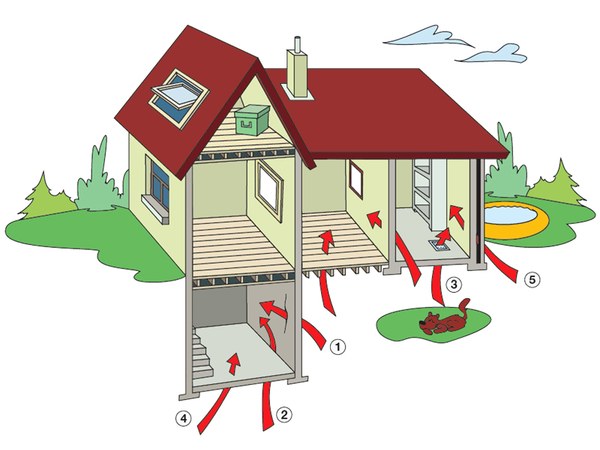
Preventing Entry into Homes
Given the health risks associated with the gas, it is crucial for homeowners and residents to take proactive steps to prevent radon from accumulating indoors. Here are some essential measures to consider:
- Testing: The first step in addressing radon gas is to test the indoor air for radon concentrations. Radon testing kits are available for purchase, or you can hire a professional radon measurement service to conduct the assessment. It is advisable to conduct long-term tests to obtain accurate results, as radon levels can vary with seasonal changes and weather conditions.
- Radon-Resistant Construction: In areas known to have higher radon levels, it is recommended to implement radon-resistant construction techniques when building new homes. These techniques include installing a gas-permeable layer beneath the foundation, a radon barrier on top of the foundation, and a ventilation system to redirect radon gas safely outside.
- Ventilation: Proper ventilation is essential to prevent radon from accumulating indoors. Ensure that your home has adequate ventilation in basements, crawl spaces, and any other enclosed areas where radon might be more likely to accumulate.
- Sealing Cracks and Openings: Radon can enter homes through cracks in walls, floors, and foundations. Regularly inspect and seal any openings or gaps to minimize radon entry points.
- Professional Mitigation: If radon testing reveals elevated levels, it is crucial to consult with a professional radon mitigation specialist. They can assess the situation, recommend appropriate measures, and install a radon mitigation system tailored to your home’s specific requirements.
- Awareness and Education: Increasing public awareness about radon gas and its health risks is essential. Government agencies, health organizations, and local authorities should collaborate to provide information and resources to citizens, promoting the importance of radon testing and preventive measures.
Radon gas is a serious health concern, and it is vital for individuals in France, as well as in any other country, to be aware of its potential presence and the associated risks. Regular radon testing, implementing radon-resistant construction techniques, ensuring proper ventilation, and sealing openings are some of the crucial steps individuals can take to prevent radon from entering their homes. By staying informed and taking appropriate preventive measures, we can reduce the risks associated with radon gas and protect ourselves and our loved ones from its potential harm.
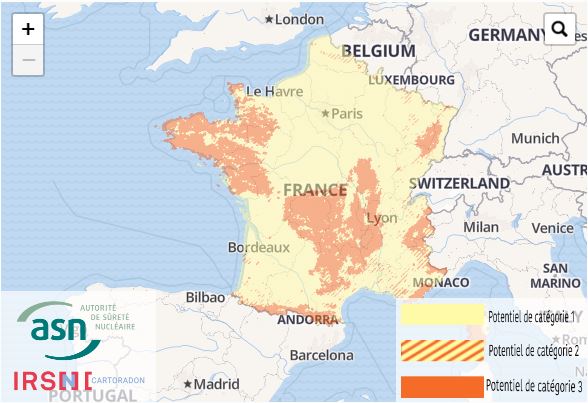
3 exposure zones in France
To make the public aware of the presence of this gas in the air, the government has decided to divide the French territory, at the level of municipalities or districts of large cities, into three zones, according to the radon potential they present. The map of these areas is available on the IRSN website, and provides information on the potential risk of exposure depending on the region.
The most exposed regions are therefore Corsica, due to the granite nature of the island, but also Brittany, and finally the Massif Central. This is explained by the long volcanic activity of this region on a geological scale. The Alps, the Pyrenees, the Vosges and the Jura are also concerned.
It should be noted, however, that in zone 1, places may present the same risks for homes. In zone 1, there are no preventive measures, so the danger is paradoxically higher by not taking the risk into account. The map of radon zones therefore only has an indicative value, and does not dispense with carrying out more precise measurements depending on the locality and the infrastructures.
What should I do if I am in zone 3 radon?
Living in a municipality located in zone 3 radon involves a risk, but there are solutions.
To find out more precisely the potential of your region or municipality, it is recommended to inquire directly at the town hall. Indeed, a municipality located in zone 3 may very well have less radon in the air than another located in zone 1, and vice versa. To know precisely the concentration, only the measurement will prevail!
If the services of the town hall confirm the presence of a risk, it is best to call on a professional to carry out more precise measurements.
Action Radon, and Jean-Noël ANTOINE offer precise expertise of the radon potential of your premises and homes, to then take the measures adapted to your situation. Indeed, if an individual has no legal obligations apart from the sale and rental of a property, the same is not true for professionals.
Depending on the radon expertise, it will therefore be necessary to consider investing in remediation work: an appropriate ventilation system, or even some sealing work to reduce the radon level in your home, a soil depressurization system. There are work aids renewed from year to year and specific to each region.
Finding an expert that can help
In the South of France, some villages have a higher risk of the gas, such as some parts of Mougins. And if your house is old, or has hardly any fresh air ventilation, it is wise to contact us with the form below. Our renovation team works with Action Radon, a Swiss certified Radon expert that analyses your villa and all ventilation flows. They will come up with a plan to reroute the radon gas and make your home a happy and healthy place to live.
Long Term Rental
 //
//