
Owning luxury property in France comes with far more than sweeping views and elegant interiors. High-value properties face specialized taxes that can dramatically alter investment returns and long-term wealth strategies. For international buyers and seasoned investors alike, navigating complex French tax laws and local regulations is critical. Understanding how luxury real estate tax works, what it aims to accomplish, and the hidden risks involved is the first step to making wise, compliant choices in the French Riviera’s prestigious property market.
Table of Contents
- Defining Luxury Real Estate Tax and Its Purpose
- Types of Luxury Real Estate Taxes in France
- Governing Laws for French Riviera Properties
- Tax Obligations for International Buyers
- Cost Implications and Tax Planning Strategies
- Common Pitfalls and Compliance Risks
Key Takeaways
| Point | Details |
|---|---|
| Luxury Real Estate Tax Purpose | This tax not only generates revenue but also aims to redistribute wealth, discourage speculation, and influence housing market dynamics. |
| French Tax System for Luxury Properties | Key taxes like the Impôt sur la Fortune Immobilière (IFI) and taxe foncière impose fiscal responsibilities on high-value property owners, necessitating strategic planning. |
| Legal Framework in the French Riviera | Complex local regulations require thorough understanding and compliance to mitigate risks associated with property transactions and ownership. |
| Pitfalls in Investment Compliance | Investors must avoid common mistakes such as underestimating costs and failing to document accurately to prevent severe financial penalties. |
Defining Luxury Real Estate Tax and Its Purpose
Luxury real estate tax represents a sophisticated fiscal mechanism targeting high-value property transactions and ownership. As defined by Wikipedia, this specialized tax is designed to generate revenue from non-essential, premium real estate assets primarily purchased by wealthy individuals.
The fundamental purpose of luxury real estate tax extends beyond simple revenue generation. It serves multiple strategic economic objectives:
- Redistribute wealth through targeted taxation
- Generate additional government revenue streams
- Create economic disincentives for excessive property speculation
- Manage housing market dynamics by introducing financial barriers
Unlike standard property taxes, luxury real estate taxes specifically target properties exceeding predetermined value thresholds. Wikipedia notes that such taxes can be structured as annual assessments or transaction-based levies, with implementation varying significantly across different jurisdictions.
For high-net-worth property investors, understanding luxury real estate tax becomes crucial. These taxes can materially impact investment strategies, potentially affecting overall returns and long-term portfolio planning. Sophisticated investors must carefully analyze local tax regulations, assessment methodologies, and potential exemptions to optimize their real estate investment approaches.

Types of Luxury Real Estate Taxes in France
France has developed a sophisticated system of luxury real estate taxation that targets high-value properties through multiple strategic mechanisms. According to Lodgis, these taxes include transfer duties upon acquisition, which typically range from 7-8% of the property’s total price.
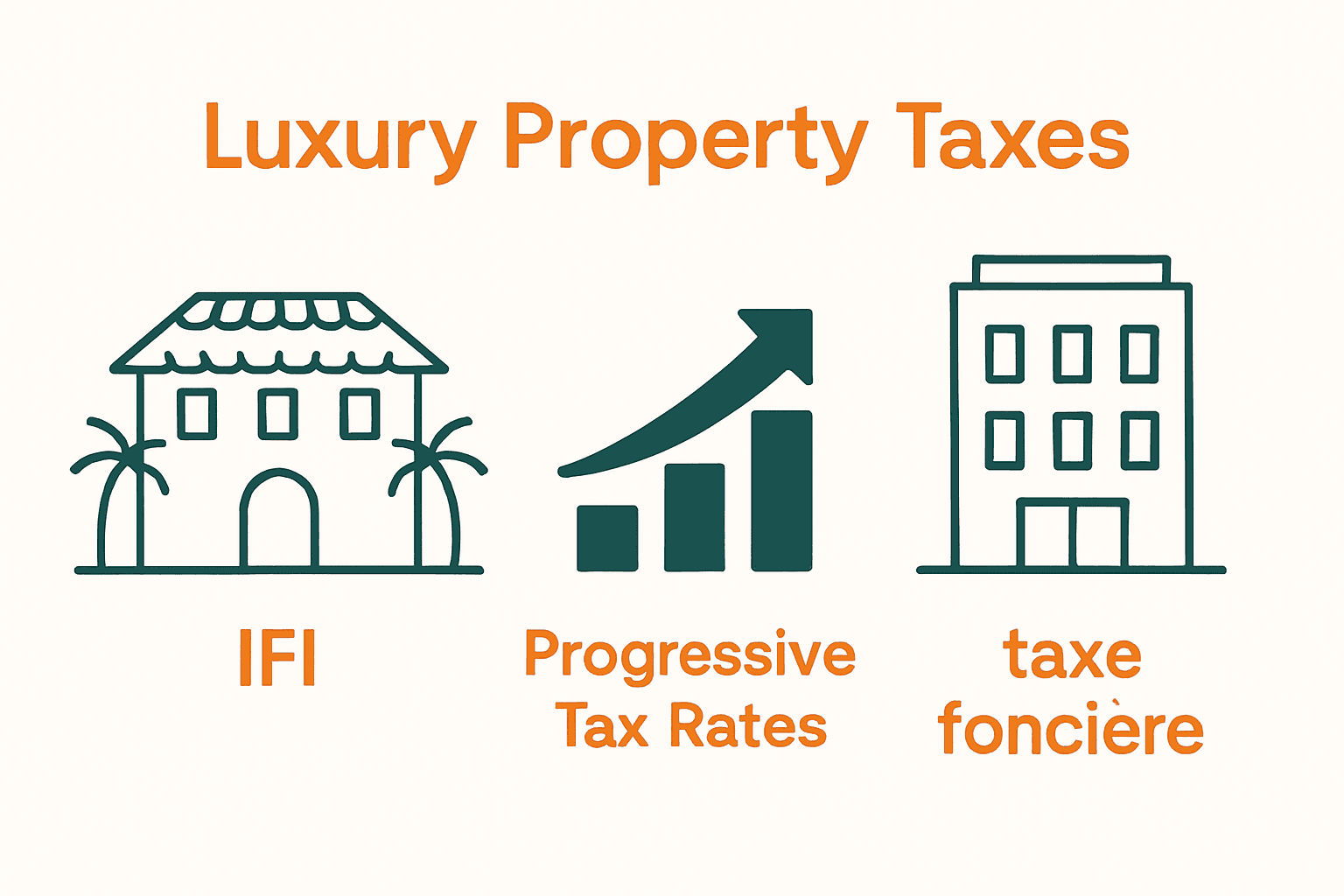
The primary luxury real estate tax in France is the Impôt sur la Fortune Immobilière (IFI), a targeted wealth tax with specific characteristics:
- Applies to net taxable real estate assets exceeding €1.3 million
- Calculated based on the property’s net value
- Levied annually on high-net-worth property owners
- Progressive tax rate structure based on total asset value
RSM Global highlights that beyond the IFI, luxury property owners must also navigate additional tax obligations. These include the taxe foncière, a property tax calculated using the property’s cadastral value, which can vary significantly depending on location and property characteristics.
For international investors and high-net-worth individuals, understanding these nuanced tax regulations becomes critical. The French tax system is designed to not just generate revenue, but to manage real estate market dynamics, redistribute wealth, and ensure that luxury property ownership comes with proportional fiscal responsibilities. Sophisticated investors must carefully analyze these tax structures, considering potential exemptions, legal strategies, and long-term financial implications before making significant real estate investments in France.
Governing Laws for French Riviera Properties
The French Riviera’s property landscape is governed by a complex and nuanced legal framework that demands sophisticated understanding from international investors. Property regulations in this region blend national legislation with specific regional mandates, creating a unique legal environment for real estate transactions and ownership.
Recently, Qualifisc highlighted significant changes through the French Finance Act 2023, which introduced targeted regional taxation in the Provence-Alpes-Côte d’Azur (PACA) region. This legislation specifically impacts various property types, including:
- Commercial spaces
- Office properties
- Storage facilities
- Parking infrastructure
Key legal considerations for property ownership in the French Riviera encompass multiple dimensions beyond taxation. Investors must navigate intricate regulations surrounding property acquisition, foreign ownership rights, inheritance laws, and zone-specific building restrictions. The civil law system, fundamentally different from common law jurisdictions, requires careful interpretation of property rights, contractual obligations, and potential limitations on property use.
Furthermore, luxury property investors must remain vigilant about evolving legal frameworks. Local municipalities in the French Riviera often implement additional regulations concerning architectural preservation, environmental sustainability, and historical site protection. This multilayered regulatory environment demands expert legal counsel to ensure full compliance and mitigate potential risks associated with high-value real estate investments in this prestigious region.
Tax Obligations for International Buyers
International luxury real estate investors in France face a sophisticated and multifaceted tax landscape that requires meticulous planning and expert guidance. Non-resident property ownership comes with specific fiscal responsibilities that extend far beyond simple property acquisition costs.
RSM Global highlights critical tax obligations for international buyers, emphasizing that non-resident individuals are subject to several key taxation mechanisms:
- Real Estate Wealth Tax (IFI) on net assets exceeding €1.3 million
- Annual taxe foncière property taxes, regardless of residency status
- Capital gains tax on property sales
- Potential inheritance and gift tax implications
The complexity of French tax regulations demands a strategic approach. International buyers must carefully structure their property investments, considering factors such as potential tax treaty provisions, investment vehicle selections, and long-term financial planning. This might involve establishing a Société Civile Immobilière (SCI), a legal structure that can offer more flexible tax management and inheritance planning for foreign investors.
Beyond direct taxation, international buyers must also navigate intricate reporting requirements, potential withholding taxes, and the nuanced interactions between their home country’s tax system and French fiscal regulations. Sophisticated investors typically engage specialized tax advisors who understand both the French tax code and international tax law, ensuring comprehensive compliance and optimizing their financial strategy for luxury real estate investments in the French Riviera.
Cost Implications and Tax Planning Strategies
Luxury real estate investment in France demands sophisticated financial planning that goes beyond simple property acquisition. Tax optimization requires a comprehensive approach that anticipates potential fiscal challenges and leverages strategic financial structures.
Estatefy emphasizes the critical importance of strategic tax planning, highlighting several key considerations for luxury property investors:
- Careful analysis of acquisition taxes
- Strategic management of annual property taxes
- Comprehensive capital gains tax planning
- Leveraging specific exemptions and deductions
- Evaluating optimal holding structures
Sophisticated investors typically employ multiple strategies to minimize tax liabilities. These may include establishing Société Civile Immobilière (SCI) structures, which can provide significant tax advantages by allowing more flexible ownership and inheritance planning. The goal is to create a legal framework that not only complies with French tax regulations but also optimizes overall financial efficiency.
Beyond immediate tax considerations, successful tax planning requires a holistic approach that integrates long-term investment goals, potential rental income, future capital appreciation, and inheritance strategies. This multifaceted approach demands expert guidance from professionals who understand the nuanced intersection of French tax law, international investment strategies, and personal wealth management.
 Ultimately, the most effective tax strategy transforms potential fiscal challenges into opportunities for strategic wealth preservation and growth.
Common Pitfalls and Compliance Risks
Luxury real estate investments in the French Riviera demand exceptional diligence to navigate the intricate landscape of legal and financial compliance. Regulatory complexity can transform seemingly straightforward transactions into potential legal minefields for unsuspecting international investors.
Estatefy highlights several critical pitfalls that can derail luxury property investments:
- Underestimating comprehensive acquisition costs
- Overlooking recurring annual tax obligations
- Mismanaging potential capital gains tax scenarios
- Failing to accurately assess property valuation
- Neglecting detailed financial documentation
RSM Global emphasizes the severe consequences of non-compliance, which can include substantial financial penalties. Investors must be particularly cautious about accurate asset declaration, especially concerning the Impôt sur la Fortune Immobilière (IFI), where misreporting property values can trigger comprehensive tax audits and significant legal repercussions.
Navigating these compliance risks requires a proactive, multilayered approach. Sophisticated investors typically engage specialized legal and tax professionals who understand the nuanced French regulatory environment. This strategic partnership helps mitigate risks by ensuring meticulous documentation, timely reporting, and comprehensive understanding of evolving tax regulations. The potential costs of non-compliance far outweigh the investment in expert guidance, making professional consultation an essential component of successful luxury real estate investment in France.
Navigate Luxury Real Estate Tax with Confidence on the French Riviera
Understanding the complexities of luxury real estate tax is essential for visionary investors looking to secure legacy assets on the Côte d’Azur. The challenges of managing progressive wealth taxes like Impôt sur la Fortune Immobilière, navigating acquisition duties, and anticipating ongoing fiscal obligations can be overwhelming. If you aim to protect your investment from compliance risks and plan your portfolio with precision, this knowledge is your first step to success.
At Living on the Côte d’Azur, we specialize in guiding high-net-worth buyers through these intricate tax landscapes and legal frameworks. Our expertise offers you tailored strategies that balance tax optimization with your long-term estate goals while uncovering exclusive opportunities in luxury villas French Riviera 2025. Explore how to transform potential tax challenges into strategic advantages by partnering with professionals who understand every nuance.
Ready to turn your Riviera real estate vision into a secure legacy without costly surprises? Connect with our dedicated team today. Discover how to invest smartly with insights on Buying Luxury Real Estate on the French Riviera, secure your family’s future through Legacy Investments, or explore New Constructions on the Côte d’Azur. Your journey to a tax-optimized estate begins now at Living on the Côte d’Azur.
Frequently Asked Questions
What is luxury real estate tax?
Luxury real estate tax is a specialized tax mechanism targeting high-value property transactions and ownership, designed to generate revenue primarily from wealthy individuals owning premium real estate assets.
How does the luxury real estate tax impact investors?
The luxury real estate tax can significantly impact investment strategies for high-net-worth property investors by affecting potential returns and long-term portfolio planning, necessitating a thorough understanding of local tax regulations.
What types of luxury real estate taxes exist?
Luxury real estate taxes include various mechanisms such as annual assessments, transaction-based levies, and specific taxes like the Impôt sur la Fortune Immobilière (IFI), which applies to net taxable real estate assets exceeding a certain threshold.
What are some common compliance risks associated with luxury real estate investments?
Common compliance risks include underestimating acquisition costs, overlooking annual tax obligations, mismanaging capital gains tax scenarios, and failing to accurately assess property valuations, all of which can lead to severe financial penalties or audits.
Recommended
- Top Locations High-Value Luxury Real Estate on the French Riviera
- 法国里维埃拉的极致奢华理念 – Living on the Côte d’Azur
- The concept of Ultra Luxury on the French Riviera – Living on the Côte d’Azur
- Luxury Real Estate Explained: Key Features and Value – Living on the Côte d’Azur
- Blog – Corrado Manenti
- Real Estate Tips for Buyers & Sellers – Homes2MoveYou.com
 //
//