
Over 70 percent of Italians own their home, making Italy one of the strongest homeownership markets in all of Western Europe. For the american buyer searching for luxury or investment property, that level of stability adds an extra layer of confidence and opportunity. Understanding why Italy continues to attract global attention unlocks pathways to enduring value, lifestyle appeal, and unique real estate advantages you may not find anywhere else.
Table of Contents
- Italy Real Estate: Defining The Opportunity
- Luxury Hotspots: Tuscany, Amalfi Coast, And Beyond
- Navigating The Italian Buying Process
- Legal, Tax, And Ownership Essentials
- Comparing Italy To Other Luxury Markets
Key Takeaways
| Point | Details |
|---|---|
| Market Potential | Italy’s real estate market is valued at approximately $10.2 trillion, with significant growth projected over the next decade, attracting both domestic and foreign investors. |
| Luxury Investment Regions | Key areas for investment include Tuscany, Amalfi Coast, Milan, and Rome, each offering unique properties and high appreciation potential. |
| Understanding the Process | Purchasing property in Italy requires navigating distinct legal and financial requirements, making local expertise essential for foreign buyers. |
| Competitive Advantage | Italy offers lower property prices compared to other luxury markets like Paris and Monaco, along with a rich cultural heritage that enhances long-term investment value. |
Italy Real Estate: Defining the Opportunity
Italy’s real estate market represents an extraordinary investment landscape with remarkable potential for discerning investors. According to PwC, the market was valued at approximately 10.2 trillion US dollars in 2023, with sustained growth projections over the next decade. This robust market is driven by strategic factors including foreign investment, urban planning initiatives, and sustainable development projects.
The residential sector dominates Italy’s property market, accounting for over half of all transactions. En Wikipedia highlights that Italy boasts one of the highest homeownership rates in Western Europe, reaching an impressive 72%. In April 2025, the average residential property price peaked at approximately 2,099 euros per square meter, signaling strong market resilience and appreciation potential.
Key opportunities for international investors include:
- Tuscany: Historic villas and countryside estates
- Amalfi Coast: Luxury seafront properties with stunning Mediterranean views
- Milan: Premium urban apartments in Italy’s financial hub
- Rome: Historic properties with significant cultural and architectural value
Successful investment requires understanding local regulations, tax implications, and regional market dynamics. Partnering with experienced local real estate professionals who understand the nuanced Italian property landscape can provide critical insights and smooth transaction processes.
Luxury Hotspots: Tuscany, Amalfi Coast, and Beyond
Luxury real estate in Italy represents a captivating investment landscape that extends far beyond traditional markets. PwC highlights that regions like Tuscany and the Amalfi Coast are attracting significant foreign investor attention, driven by their exceptional scenic beauty, rich cultural heritage, and high-quality property offerings. These destinations are not merely real estate markets, but curated experiences that blend lifestyle appeal with substantial investment potential.

Reuters reports an intriguing shift in investor dynamics, with professionals redirecting focus from Milan’s cooling market to Rome’s emerging opportunities. Last year, property investors channeled 1.7 billion euros into Roman projects, demonstrating the dynamic nature of Italy’s luxury real estate landscape.
Key Luxury Investment Regions:
- Tuscany: Renowned for:
- Historic villas with expansive countryside views
- Proximity to world-class wineries
- Potential for significant appreciation
- Amalfi Coast: Featuring:
- Stunning Mediterranean waterfront properties
- Limited inventory driving value
- Strong rental income potential
- Rome: Offering:
- Urban luxury apartments
- Historic architectural treasures
- Growing investment momentum
Successful luxury property investment in Italy requires deep understanding of regional nuances, legal frameworks, and market trends. Sophisticated investors recognize that these properties represent more than real estate transactions—they are gateways to a timeless Italian lifestyle, blending historical charm with modern investment strategies.
Navigating the Italian Buying Process
Purchasing real estate in Italy involves a nuanced and structured approach that demands careful preparation and understanding of local legal frameworks. The Italian property acquisition process differs significantly from other European markets, requiring international buyers to navigate unique administrative and financial requirements with precision and expertise.
Key Steps in the Italian Real Estate Acquisition Process:
- Preliminary Research:
- Obtain a codice fiscale (tax identification number)
- Open an Italian bank account
- Secure legal representation familiar with Italian property law
- Property Selection:
- Conduct thorough due diligence
- Verify property ownership and legal status
- Assess potential restrictions on foreign ownership
- Transaction Stages:
- Submit formal offer (proposta d’acquisto)
- Negotiate and sign preliminary contract (compromesso)
- Complete final notarized deed (rogito)
Financial considerations play a critical role in the Italian property purchase journey. Foreign investors should anticipate additional costs beyond the purchase price, including registration taxes, stamp duties, and potential cadastral fees. These expenses can range from 9% to 15% of the property’s value, depending on whether the buyer is purchasing a primary residence or an investment property.
Successful navigation of the Italian real estate market requires patience, local expertise, and a comprehensive understanding of regional variations. Working with experienced local professionals who can guide you through bureaucratic intricacies, translate legal documents, and provide insights into regional market dynamics is not just recommended—it’s essential for a smooth and legally compliant property acquisition in Italy.
Legal, Tax, and Ownership Essentials
Navigating the complex landscape of Italian property ownership demands a comprehensive understanding of the legal and fiscal frameworks that govern real estate transactions. Practice Guides highlights the critical importance of the IMU (Imposta Municipale Unica), a municipal property tax that represents a fundamental consideration for property owners across Italy. The tax calculation involves a nuanced process, with the taxable basis determined by the cadastral income (including a 5% increase) and multiplied by property-specific coefficients.
Estatefy provides deeper insights into the multifaceted tax landscape that international investors must navigate. Beyond the IMU, property owners must budget for additional expenses such as the TARI (waste disposal tax), which is calculated based on property size and occupancy. These ongoing financial obligations underscore the importance of comprehensive financial planning when investing in Italian real estate.
Key Legal and Tax Considerations:
- Ownership Structures:
- Direct personal ownership
- Corporate entity ownership
- Joint ownership options
- Tax Obligations:
- IMU municipal tax (0% to 1.14% annually)
- TARI waste disposal tax
- Capital gains tax on property sales
- Potential inheritance and gift tax implications
- Foreign Investor Protections:
- Equal property rights for international buyers
- No significant restrictions on foreign ownership
- Bilateral tax treaties with many countries
Successful property ownership in Italy extends far beyond the initial purchase. Investors must maintain meticulous records, understand local tax regulations, and potentially engage professional tax advisors who specialize in Italian real estate. The complexity of the system demands a proactive approach, with careful attention to changing regulations, local municipal variations, and potential tax optimization strategies that can significantly impact long-term investment returns.
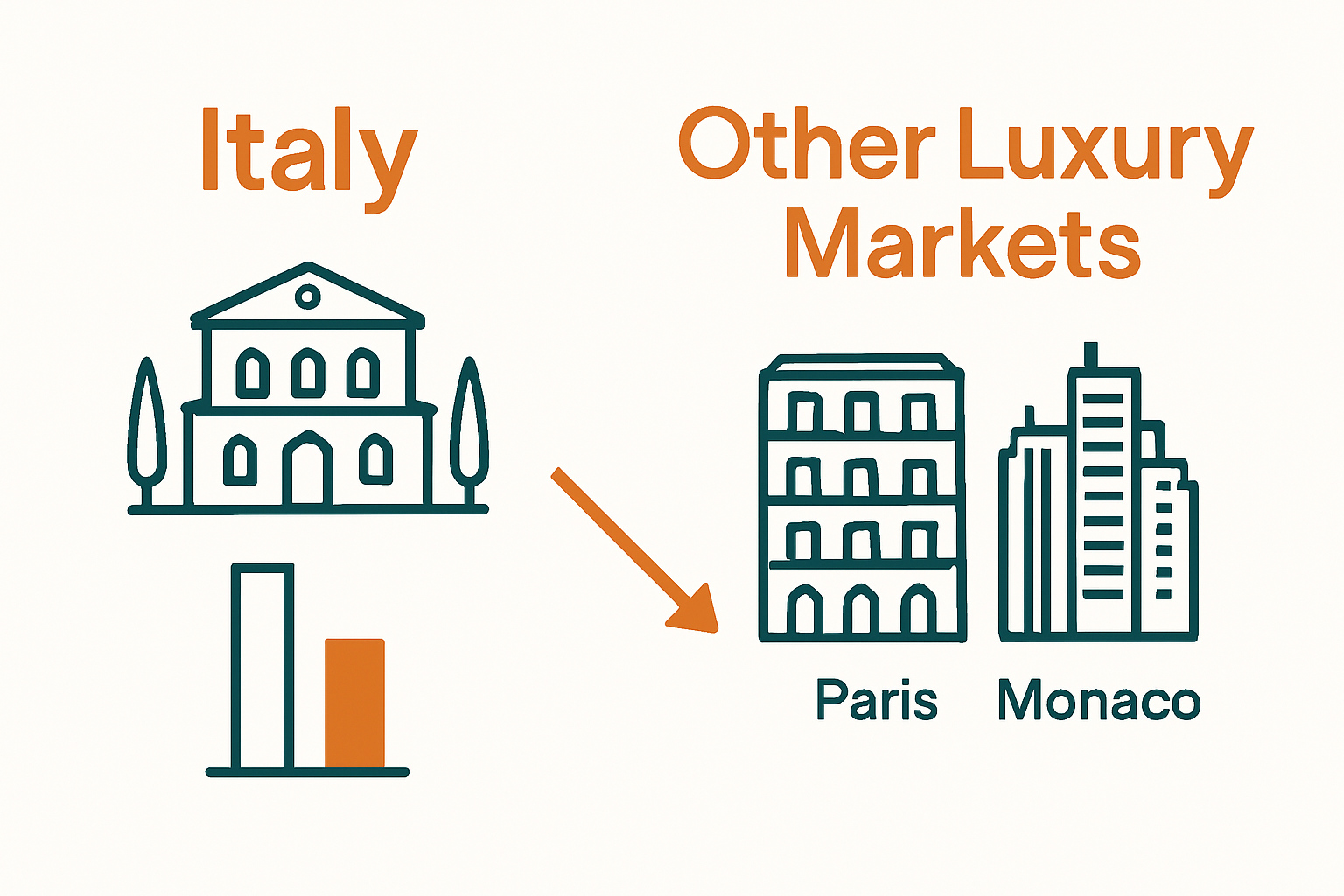
Comparing Italy to Other Luxury Markets
Italy emerges as a distinctive player in the global luxury real estate landscape, offering unique advantages that set it apart from other premier investment destinations. PwC highlights Italy’s competitive edge, emphasizing the remarkable combination of cultural heritage, scenic beauty, and comparatively attractive property prices that distinguish it from other European luxury markets.
Reuters provides additional insight into Italy’s evolving real estate dynamics, noting particular opportunities in cities like Rome, where property prices remain more accessible compared to other southern European capitals such as Lisbon or Athens. This affordability, coupled with significant urban renewal efforts and increased public investment, positions Italian markets as uniquely compelling for discerning investors.
Comparative Market Advantages:
- Price Competitiveness:
- Lower entry points compared to Paris
- More accessible than Monaco
- Competitive pricing relative to Swiss markets
- Investment Quality:
- Rich historical property portfolios
- Strong cultural preservation
- Potential for significant appreciation
- Lifestyle Factors:
- Unparalleled culinary experiences
- World-renowned art and architecture
- Diverse geographical landscapes
While markets like London, Paris, and Monaco represent traditional luxury real estate strongholds, Italy offers a nuanced investment environment. The combination of lower acquisition costs, robust cultural infrastructure, and diverse regional opportunities creates a compelling alternative for international investors seeking both financial returns and exceptional living experiences.
Experience Timeless Luxury Beyond Italy in the Heart of the French Riviera
The challenges of navigating Italy’s rich but complex real estate market demand expert guidance and a trusted partner who understands not only legal frameworks and tax codes but also the lifestyle and legacy that come with owning a luxury property. From Tuscany’s historic villas to Rome’s growing investment momentum, the emotional pull of Italian estates is clear. Yet for the discerning investor seeking to expand or diversify with similarly prestigious yet distinct opportunities, the French Riviera offers an alluring alternative filled with eco-luxury villas, breathtaking sea views, and lifestyle experiences that match Italy’s charm with modern sophistication.
At Living on the Côte d’Azur, we specialize in unlocking the secrets of the Côte d’Azur legacy investments. Whether you desire a private sanctuary in Cap d’Antibes, a modernist estate with sweeping sea views, or an off-plan gem in Saint-Tropez designed for both comfort and financial growth, our expertise makes the buying process effortless and rewarding. Discover how seamless luxury real estate acquisitions are when you have seasoned local experts by your side, guiding you through every legal, financial, and lifestyle detail.
Ready to embark on your next luxury property journey that blends legacy, lifestyle, and lucrative returns? Explore how your Italian real estate aspirations can translate into a breathtaking Côte d’Azur legacy. Contact the team today at Living on the Côte d’Azur to unlock your gateway to French Riviera paradise. Learn more about how we simplify the buying process through our tailored services here and experience the art of legacy investing like never before.
Frequently Asked Questions
What are the key opportunities for international investors in Italian real estate?
Key opportunities for international investors include historic villas and countryside estates, luxury seafront properties, premium urban apartments, and historic properties with significant cultural and architectural value.
How does the buying process for real estate in Italy differ from other countries?
The buying process in Italy involves obtaining a tax identification number, conducting thorough due diligence on property status, and signing a preliminary and final contract before registration. Understanding local legal frameworks is essential.
What additional costs should investors consider when purchasing property in Italy?
Investors should budget for registration taxes, stamp duties, and potential cadastral fees, which may range from 9% to 15% of the property’s value, depending on the type of property.
What legal and tax obligations do property owners face in Italy?
Property owners in Italy must consider municipal property taxes (IMU), waste disposal taxes (TARI), potential capital gains tax, and be aware of inheritance and gift tax implications as part of their ownership responsibilities.
Recommended
 //
//